


Raghuram Rajan: Global Search for Economic Direction
Raghuram Rajan: Global Search for Economic Direction
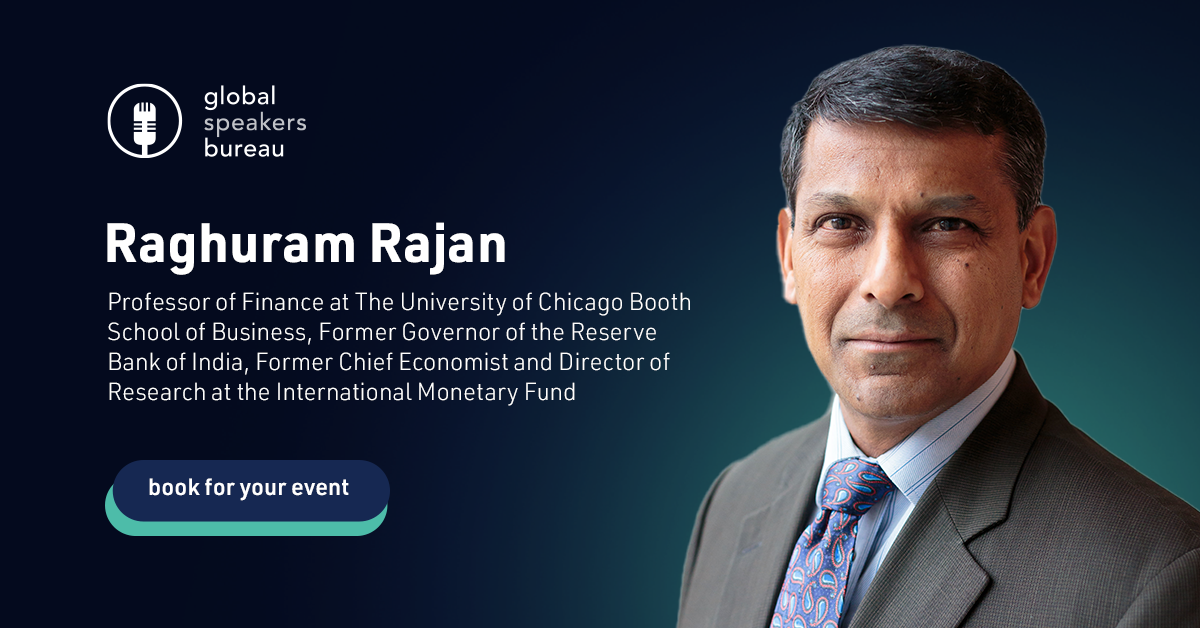
Professor Raghuram Rajan stands among the most respected and influential economic thinkers of the modern era. His work experience spans academia, central banking, and international policy leadership, placing him at the center of conversations about financial stability, global development, and the structural pressures shaping contemporary markets. As former Governor of the Reserve Bank of India and former Chief Economist at the International Monetary Fund, Rajan has spent decades studying how economies evolve, how institutions respond to crisis, and how societies can build stronger and more equitable foundations for growth. His voice carries particular weight at a time when uncertainty is redefining global expectations and economies across the world are searching for leaders.
Professor Rajan is widely recognized not only for his analytical expertise but also for his willingness to challenge assumptions. His early warnings about vulnerabilities in global financial markets, delivered before the 2008 financial crisis, demonstrated his ability to identify systemic risks that others overlooked. While some dismissed his concerns at the time, history ultimately confirmed the accuracy of his analysis. This willingness to speak clearly about uncomfortable realities continues to define his public contributions, making him a trusted figure for audiences seeking insight into the forces shaping global financial behavior.
How societies can build resilience
One of Professor Rajan's central interests is understanding how societies can build resilience. He often emphasizes that economic stability is not just about monetary policy or financial regulation, but also about institutional trust, balanced growth, and social cohesion. His writing and public speaking highlight how fragmented communities, unequal access to opportunity, and political polarization can undermine economic progress. For Professor Rajan, financial systems and social systems are deeply connected. When one is unstable, the other eventually feels the effects.
This message is most relevant today, as many individuals and businesses express renewed interest in global finance. The combination of geopolitical turbulence, rapid technological change, and market volatility has prompted people to search for reliable guidance. In such an environment, Professor Rajan's calm, structured approach offers a sense of direction. He helps audiences understand not only what is happening, but why it matters and how different actors can respond constructively. His analysis avoids sensationalism and instead focuses on long term patterns, structural conditions, and the incentives shaping decision making.
Professor Rajan's work also examines the role of markets in improving or worsening inequality. He has argued that markets function best when opportunities are broadly accessible and competition is fair. When economic systems tilt toward narrow interests, innovation slows, social tension grows, and long term growth weakens. His perspective encourages policymakers and corporate leaders to think about economic design in a more holistic way. This includes education, financial inclusion, regulatory strength, and support for entrepreneurship. Professor Rajan has described economic development as a form of shared responsibility, requiring alignment between governments, businesses, and communities.
The future of globalization
Another major theme in his work is the future of globalization. Professor Rajan does not reject globalization, but he calls for a more balanced approach that considers how communities adapt to global shifts. He suggests that countries and regions need resilient institutional structures to manage the challenges of global competition. Instead of turning inward, societies should focus on building capabilities that allow them to participate effectively in a changing world. This perspective is valuable for leaders who want to understand how global integration might evolve under new political and technological realities.
Professor Rajan's emphasis on responsible leadership also carries practical implications for organizations. He encourages executives to consider long term consequences rather than short term wins. His guidance aligns with the growing corporate interest in sustainability, ethics, and stakeholder engagement. In Professor Rajan's view, economic strength is not merely the result of technical decisions but is deeply influenced by culture, expectations, and the distribution of power within institutions. Leaders who understand these dynamics are better prepared to navigate risk and uncertainty.
An outstanding teacher
When Professor Rajan speaks at conferences or private briefings, audiences often appreciate his clarity. He explains complex dynamics in a way that is intellectually rigorous but accessible. He avoids jargon, instead focusing on the essential relationships between data, behavior, and policy. This skill makes him an effective communicator for senior leaders, policymakers, investors, and academic audiences alike. His ability to connect macroeconomic trends with everyday experience helps organizations better understand how large scale shifts influence local realities.
Professor Rajan's insights are especially relevant today as economic volatility raises questions about the future of growth, inflation, and financial stability. With political instability affecting supply chains, interest rate decisions, and investment patterns, many organizations seek guidance on how to make disciplined, informed decisions. Professor Rajan's balanced viewpoint, shaped by decades of research and policymaking, offers a steady perspective. He helps audiences distinguish between short term turbulence and long term structural change.
His analysis of technological transformation also deserves attention. Rajan recognizes that innovation offers enormous potential but also brings challenges for labor markets, regulation, and social expectations. He encourages policymakers to anticipate these shifts and prepare strategies that support workers and encourage fair competition. For businesses, he emphasizes that adaptability and learning are central to future success. This is particularly important as artificial intelligence, automation, and digital platforms reshape the flow of information, capital, and opportunity.
Ultimately, Professor Raghuram Rajan's contributions extend beyond economics. His work reflects a belief that societies thrive when institutions function with transparency, when citizens trust their systems, and when growth is inclusive. He reminds audiences that financial systems are tools, not ends in themselves, and that the purpose of economic policy is to support human well being. His perspective encourages leaders to think about progress in ways that combine efficiency with fairness, innovation with stability, and opportunity with responsibility.
Why you should book Professor Rajan for your event
In a period of rapid global change, Professor Rajan remains one of the most compelling voices on how nations and organizations can adapt with intelligence and integrity. His thoughtful approach and clear communication style make him a valuable guide for audiences seeking understanding in uncertain times. As the world continues to confront new financial questions and geopolitical challenges, Professor Rajan's emphasis on resilience, balance, and forward looking decision making provides a strong foundation for constructive dialogue and practical action.
For more information about Professor Raghuram Rajan's speaking topics, background, and availability, visit https://www.gspeakers.com/our-speakers/raghuram-rajan/