


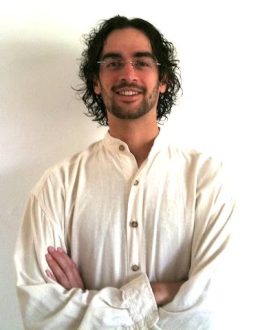
Noah Goodman keynote speaker
- AI & Education: Rethinking How Humans Learn
- AI, Language & the Science of Communication
- Can AI Understand Us?
- How Humans Think—and Why It Matters for AI
- Human vs. Artificial Intelligence
- Minds & Machines: What AI Can Learn from Human Intelligence
- Social Intelligence: The Next Challenge for AI
- The Future of AI: From Pattern Recognition to Reasoning
- The Science of Intelligence: What Comes after Today's AI?
- Thinking under Uncertainty
Professor Noah Goodman is a leading scientist working at the intersection of artificial intelligence, cognitive science, psychology, and computer science. A Professor of Psychology and Computer Science at Stanford University, Noah investigates one of the most important questions of the AI era: How does intelligence work—and what can understanding the human mind teach us about building better artificial intelligence?
At Stanford, Noah directs the Computation & Cognition Lab, where his research explores how people learn, reason, communicate, understand other people, and make sense of an uncertain world. His work combines insights from psychology with mathematics and computer science to create computational models that explain human intelligence—and increasingly illuminate both the possibilities and limitations of artificial intelligence.
Noah is also a Faculty Affiliate of the Stanford Institute for Human-Centered Artificial Intelligence (HAI) and a member of the Wu Tsai Neurosciences Institute, placing him at the center of Stanford's interdisciplinary efforts to understand intelligence across humans and machines.
A central theme of Noah's research is probabilistic reasoning: how intelligent systems can make useful decisions despite incomplete or uncertain information. He has been a pioneer in probabilistic programming, an approach that combines programming languages with probability to create systems capable of reasoning about complex and uncertain environments.
His research also explores language and communication. Noah studies how humans understand what other people really mean—not simply the literal words they use—and how social reasoning shapes communication. This work has important implications for the development of AI systems and language models that increasingly communicate, collaborate, and interact with people.
More broadly, Noah's research spans learning, memory, concepts, causal reasoning, social cognition, language, perception, and decision-making. By examining these fundamental ingredients of human intelligence, his work provides a powerful framework for understanding what today's AI systems can do, where they differ from human intelligence, and what may be required to build more capable machines.
Before joining Stanford, Noah conducted research at MIT, first as a postdoctoral associate and later as a research scientist. His academic background is unusually interdisciplinary: he holds a PhD in Mathematics from the University of Texas at Austin, as well as bachelor's degrees in Mathematics and Physics from the University of Arizona.
Noah's company humans& is a human-centered frontier AI company co-founded by Stanford professor Noah Goodman alongside leading researchers and technologists from organizations including xAI, Anthropic, and Google. The company is developing AI designed to enhance human collaboration rather than replace it, with a focus on long-term reasoning, memory, user understanding, and multi-agent intelligence. Its mission is to create AI that helps people communicate, coordinate, and work together more effectively—positioning human relationships at the center of the next generation of artificial intelligence.
As a speaker, Noah brings audiences beyond the headlines surrounding artificial intelligence. Rather than focusing only on the latest models or products, he explores the deeper science of intelligence itself—helping leaders understand how humans think, how machines "think," where the two differ, and what those differences mean for the future of AI, work, education, communication, and society.



* and we really do it immediately