


UNGA81 in New York: The GSB Keynote Speakers Connected to the Global Agenda
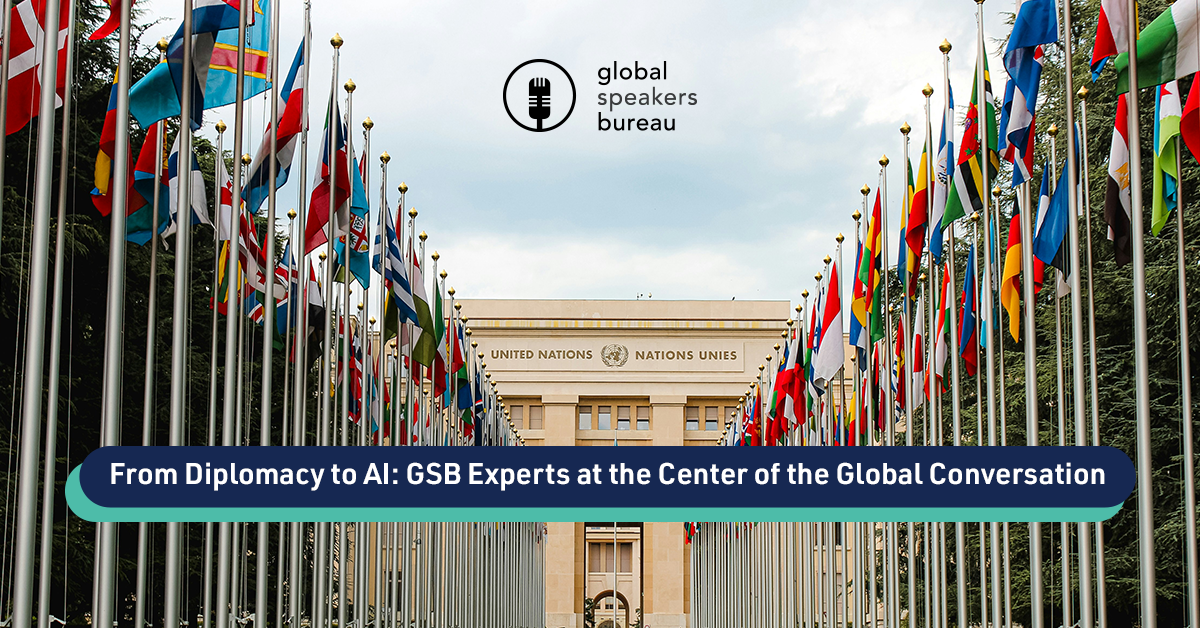
For one week each September, the United Nations General Assembly puts international affairs at the center of New York. This year's High-Level Week, held from September 22 to 29, brought together the General Debate and a series of high-level meetings on climate action, development, sea-level rise, pandemic preparedness, racial justice and nuclear disarmament. The 81st session is being held under the theme "Restoring trust, managing transformation: A United Nations that delivers for all."
For Global Speakers Bureau, the week also highlights the depth of experience represented across its roster. Several speakers have held senior United Nations positions or worked directly on major international initiatives. Therefore, their careers offer a useful way to look at the issues being discussed in New York, from diplomacy and climate policy to development and artificial intelligence.
Annalena Baerbock: Diplomacy under pressure
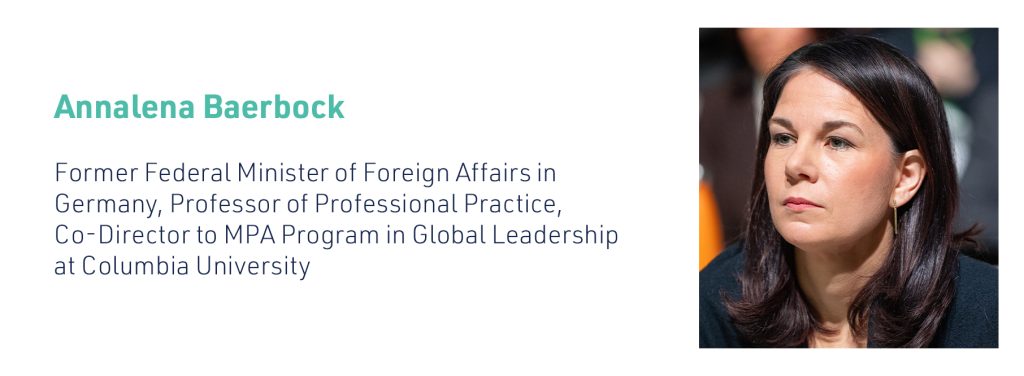
Annalena Baerbock entered this year's General Assembly having just completed a year at the center of the institution. She served as President of the 80th session of the United Nations General Assembly, handing the presidency to Bangladesh's Khalilur Rahman on September 8, 2026.
During her presidency, she had to navigate some of the most difficult questions facing the international community, from security and development to the future of multilateral cooperation.
The idea of leadership in a more fragmented international system has also been central to Baerbock's public speaking. Her past engagement "Leading in a Fragmented World" reflects the pressures created by shifting alliances and competing interests. She has also addressed the increasingly difficult relationship between technology and global governance in "Governing the Machines: What Global AI Rules Mean for Business".
The connection between these subjects is ever more relevant. Technology policy has geopolitical consequences. Economic decisions can affect diplomatic relationships. Security concerns can influence trade, energy and investment.
Jeffrey Sachs: From commitment to implementation
The Sustainable Development Goals remain one of the defining areas of the UN's work, yet the challenge is increasingly about implementation: financing projects, reducing debt pressures, expanding access to energy and health services, and maintaining international cooperation.
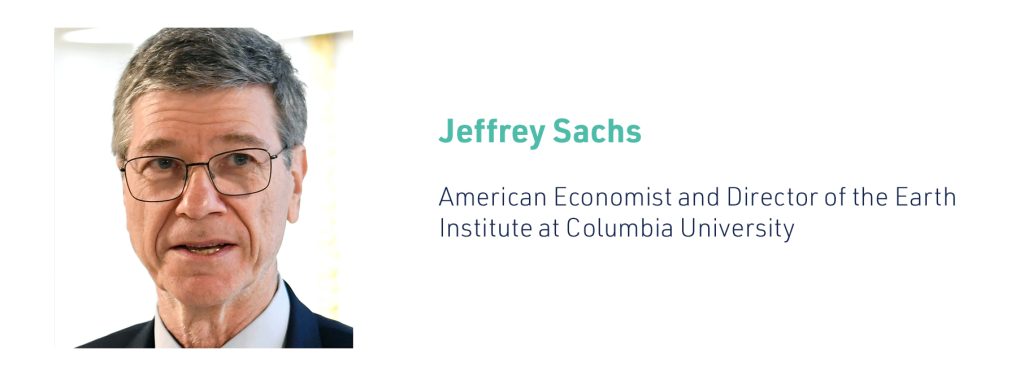
Jeffrey Sachs has worked on these questions for decades. He is Director of the Center for Sustainable Development at Columbia University, President of the UN Sustainable Development Solutions Network and an SDG Advocate for the UN Secretary-General.
On September 22, Sachs took part in the Goals Lounge in New York in a conversation titled "From Promise to Progress: The Next Breakthroughs for a Changing World". The Goals Lounge, hosted by the UN Office for Partnerships, brings together different sectors around ways to accelerate progress on the Sustainable Development Goals.
Sachs has consistently connected economics with the political and institutional conditions that determine whether development can actually happen. That perspective runs through his work on sustainable development and international economic policy.
Christiana Figueres: The diplomacy behind climate action
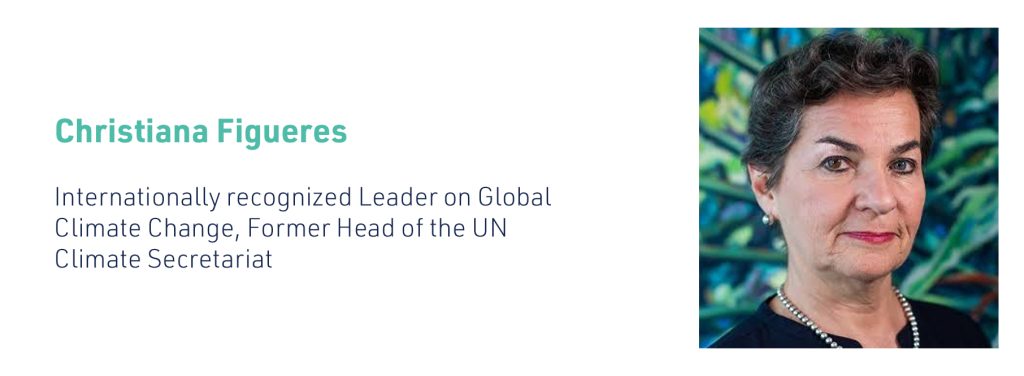
Climate remains one of the defining issues on the United Nations agenda, and few people have been closer to the international negotiations than Christiana Figueres. She served as Executive Secretary of the United Nations Framework Convention on Climate Change from 2010 to 2016 and led the UN climate secretariat through the negotiations that culminated in the Paris Agreement in 2015.
Her experience offers an unusually practical perspective on what climate diplomacy requires: building consensus among governments with different interests, keeping negotiations moving when progress is difficult, and turning broad commitments into long-term action. That outlook is reflected in her past speaking engagement "The Future We Choose - Surviving the Climate Crisis".
Mary Robinson: Putting people at the center of climate policy
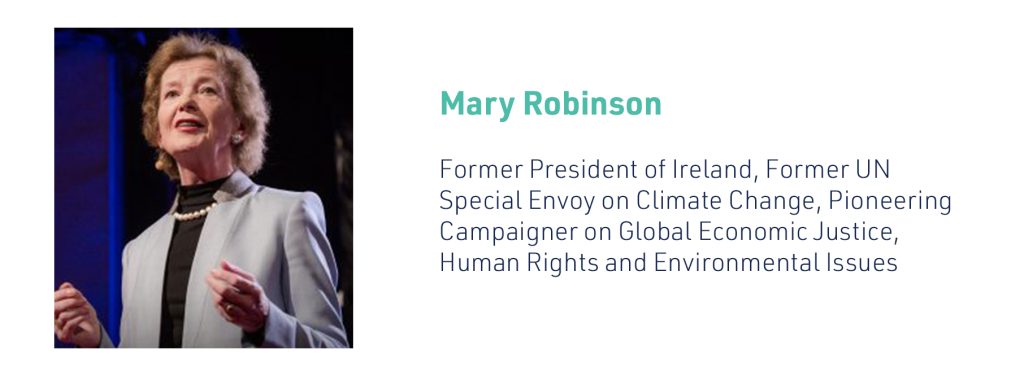
Mary Robinson brings another dimension to the climate debate.
A former President of Ireland, UN High Commissioner for Human Rights and UN Special Envoy on Climate Change, Robinson has spent decades working at the intersection of rights, development and international policy.
Her past engagement "Climate Justice: Hope, Resilience & the Fight for a Sustainable Future" captures the human-rights dimension of climate policy. As climate discussions move beyond emissions targets into adaptation, displacement, access to finance and the distribution of risk, questions of justice become increasingly difficult to separate from the environmental debate.
Helen Clark: What multilateralism looks like in practice
Helen Clark brings experience from both national government and the United Nations. After serving as Prime Minister of New Zealand, she became Administrator of the United Nations Development Programme. Her work has focused on sustainable development, gender equality, health and multilateral cooperation.
During UNGA81, Clark participated in UN Women programming on women's leadership and multilateralism and took part in discussions around financing for women's, children's and adolescents' health.
Her long-standing focus on multilateralism reflects one of the underlying challenges behind many of the issues discussed at the UN: getting countries and institutions to work together when interests diverge.
AI enters the UN agenda
Artificial intelligence has become a policy issue for the United Nations, with implications that extend well beyond technology. During UNGA81, the UN's AI and Human Development series concluded with a session titled "What Does It Mean to Be Human in the Age of AI?", bringing together voices from government, science, technology, academia and civil society.
The discussion focused on how AI is changing the way people work, learn, create and make decisions. That puts issues such as access to technology, privacy, data use and human agency firmly on the agenda.
These issues have been a relevant part of the work of several speakers represented by our agency. Miguel Luengo-Oroz served as Chief Data Scientist at UN Global Pulse, where he worked on the use of data and AI in areas including poverty, food security, migration, conflict prevention, human rights and climate. Andrew Trask, a Senior Research Scientist at DeepMind, Founder of OpenMined and member of the United Nations Privacy Task Force, has focused on privacy-preserving AI and the protection of personal data.
Their experience covers some of the practical issues now surrounding the wider use of AI: applying technology to social and development challenges, and protecting people as more decisions and services become data-driven.
As these systems become more embedded in public institutions and everyday life, those concerns will increasingly shape how AI is developed and used.
Problems that cross borders
The issues discussed during UNGA81 rarely fit within a single policy area. Climate policy affects energy and investment. Development is tied to access to finance, technology and infrastructure. Health crises move across borders quickly. AI is already raising questions about data, privacy, security and the way institutions make decisions.
That overlap explains why the UN agenda brings together people with very different areas of expertise. Solutions often depend on several pieces moving at once: scientific research, economic resources, political cooperation, effective institutions and public trust.
That complexity is precisely what makes international expertise valuable. The people working on these issues see the trade-offs, the constraints and the consequences that are often missing from the headlines.
UNGA brings many of these subjects into the same place for a few days each year. The decisions, debates and ideas discussed in New York then move into governments, companies, universities and institutions around the world.
For Global Speakers Bureau, that wider context is pivotal to what our speakers’ roster represents: people with firsthand experience of the forces and mechanisms that shape the world.