


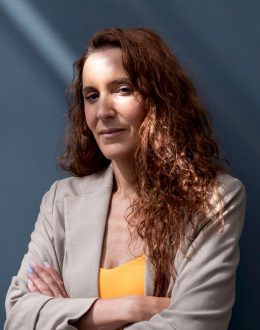
Catherine Perez-Shakdam keynote speaker
- Democratic Resilience in an Age of Extremism
- Hostile Influence Operations in Western Democracies
- Information Warfare and Narrative Capture
- Iran's Global Influence Architecture
- The Future of the Middle East
- The IRGC's Strategy and Operations
- The Muslim Brotherhood and the Future of Europe
- Women, Power, and Political Islam
Catherine Perez-Shakdam is a French political analyst, strategist, and commentator specialising in Iran, Yemen, political Islam, antisemitism, counter-extremism, and the wider machinery of authoritarian power in the Middle East. Her work is grounded in years of research into the Islamic Republic, Yemen’s war economy, and regional proxy networks, as well as direct engagement with senior figures within the Iranian regime, giving her rare first-hand insight into how these systems think and operate. She has written and spoken extensively across the UK, the Middle East, and beyond, and she is also developing work on trauma, testimony, and survivor-led responses to sexual violence in conflict.
Most people who work on extremism study it from a safe distance. Catherine Perez-Shakdam spent more than a decade inside the systems she now works to expose.
For over ten years she moved through ideological and political networks tied to the Islamic Republic of Iran, gaining direct access to senior regime figures — including Supreme Leader Ali Khamenei and President Ebrahim Raisi. While governments and intelligence services were trying to read Tehran's intentions from outside, she was watching from within. That vantage point reshaped how she understands power: not as an abstraction, but as the practical machinery authoritarian systems use to keep themselves alive.
Her authority covers Iran, political Islam, antisemitism, democratic resilience, and hostile influence operations. It rests on an uncommon mix of first-hand access, policy expertise, and strategic judgment.
Catherine's career has been built on going where others won't. Born in France and shaped by years living across the Middle East, she developed close working knowledge of the region's politics, culture, and competing ideologies. She later served as a Research Fellow at the Henry Jackson Society and advised the United Nations Security Council on Yemen, working on conflict, radicalisation, and regional security.
Today she leads the Forum for Foreign Relations, a policy institute focused on the threats posed by authoritarian regimes, extremist movements, information warfare, and geopolitical instability.
Alongside that, she serves as Chief Policy Advisor to Stop The Hate UK and Executive Director of We Believe In Israel, where she helps shape responses to extremism, antisemitism, and foreign influence. Her work has reached policymakers, diplomats, parliamentarians, security professionals, and journalists across Europe, North America, and the Middle East.
Catherine's expertise began with Iran and political Islam, but her central question has grown larger: what happens when democratic societies stop believing in their own principles?
After October 7, she became one of the more prominent voices arguing that the international community had failed to confront sexual violence used as a weapon of ideological warfare. Her analysis went after two targets at once — the crimes themselves, and the readiness of institutions, activists, and political movements to downplay or excuse them when doing so fit a preferred narrative.
That argument reaches well past the Middle East. It lands on a habit of selective morality now visible across much of the democratic world, where human rights get defended unevenly, women's rights are treated as negotiable, and universal principles bend to fit political convenience.
Her testimony cuts both ways. It exposes hostile regimes, and it exposes the soft spots inside democracies that let those regimes' narratives take hold.
Catherine's work tends to produce results rather than stop at analysis. She has helped lead campaigns that shaped parliamentary debate, informed government decisions, and moved public opinion on extremism, foreign influence, antisemitism, and national security.
Catherine has spoken to parliamentarians, diplomats, intelligence and military professionals, journalists, academics, and corporate and civil-society audiences across Europe, North America, Israel, and the Middle East. She pairs first-hand experience with hard analysis and a clear moral line, and her sessions stay close to the security debates that actually matter right now. People tend to leave with a changed sense of the forces at work, not just a fuller notebook.
* and we really do it immediately